
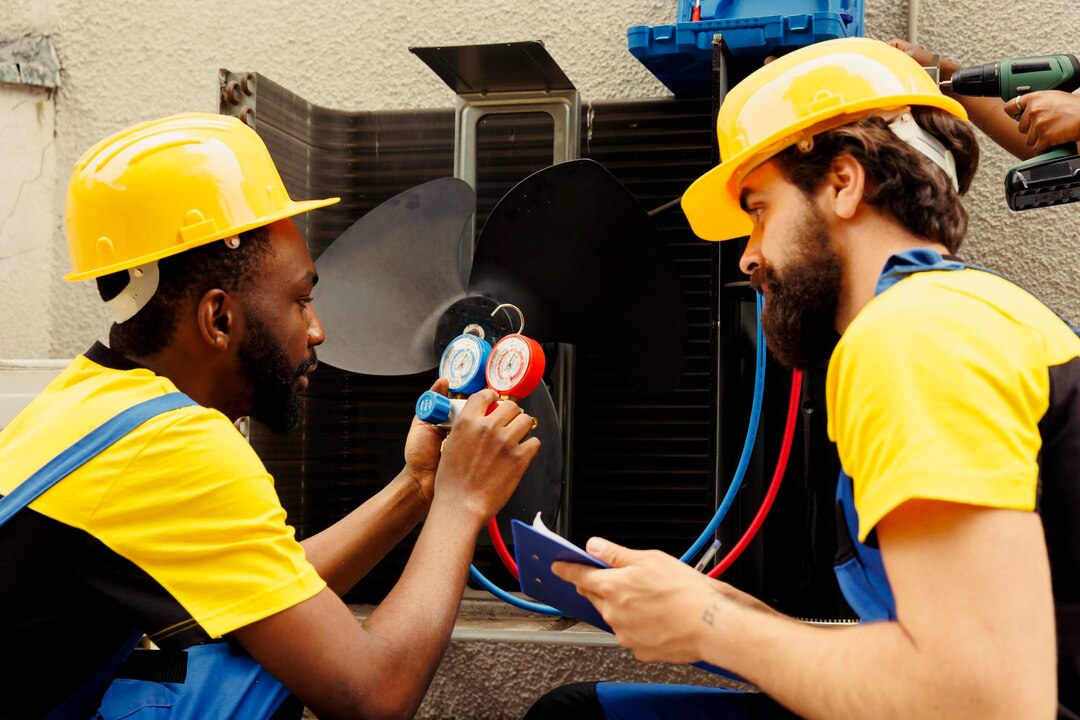
Most commercial buildings in Singapore need aircon servicing every one to three months, depending on how heavily the space is used. Server rooms and kitchens with near constant cooling demand often need monthly attention, while a typical office running weekday hours can usually stretch to a quarterly schedule. Buildings with a gross floor area of 15,000 square meters or more are also required under BCA regulation to have their chiller systems independently audited every three years, which adds a compliance layer on top of routine maintenance.
Singapore’s humidity does not do commercial air conditioning any favors. A building running its system almost every working hour of every working day wears through filters, coils, and refrigerant levels faster than most facility managers expect, and by the time a unit starts blowing warm air, the coils have usually been struggling for weeks already. MET has served enough commercial clients across Singapore to know that servicing intervals are rarely one size fits all, and getting the frequency right is less about a fixed calendar date and more about matching maintenance to actual load.
How Often Should Commercial Buildings Service Their Air Conditioning Units?
There is no single number that fits every building, but the National Environment Agency’s general guidance of servicing every three months is a reasonable baseline for standard commercial use. Buildings that run cooling almost continuously, such as server rooms or busy retail floors, tend to need it closer to monthly. A quiet back office with light foot traffic can sometimes go longer between visits without much risk, though pushing past six months on a commercial unit is where problems usually start showing up.
What Factors Determine Air Conditioning Service Frequency in Office Buildings?
Frequency is not arbitrary. A handful of variables push the schedule tighter or looser depending on how a building actually operates.
- Hours of operation, since a 24/7 server room wears differently than a nine to six office
- Occupant density, because more people in a space means more heat load and more strain on the system
- System age, as older units generally need more frequent attention to hold their original cooling capacity
- Indoor air quality requirements, particularly for spaces like clinics or F&B outlets with stricter hygiene expectations
- Local humidity exposure, given Singapore’s tropical climate accelerates coil and filter fouling year round
Getting these variables right from the start saves a lot of guesswork later, and most facility teams find it worth reviewing the schedule annually rather than locking it in once and forgetting about it.
What Happens If Commercial Aircon Servicing Is Delayed Too Long?
Deferred servicing rarely announces itself loudly at first. Energy bills creep upward before anyone notices a drop in cooling, because a dirty coil forces the compressor to work harder for the same output. Indoor air quality tends to slide too, with BCA guidance flagging that commercial spaces need to keep CO2 levels below 1,000 ppm to avoid the fatigue and poor concentration that come with stale air. Left unchecked long enough, minor inefficiency turns into a compressor failure that costs far more than a few skipped service visits would have.
How Does Singapore’s Climate Affect Aircon Servicing in Singapore Schedules?
Space cooling is already the largest single energy draw in Singapore’s commercial buildings, according to the National Climate Change Secretariat, which is part of why the city has pushed hard on the BCA’s 80-80-80 targets for 2030. High humidity means condensation builds up faster inside ducts and around coils than it would in a drier climate, and that moisture is exactly what mold and mildew need to take hold. A building that would get away with quarterly servicing in a temperate country often can’t afford to skip a month here without some drop in performance.
What Should Be Included in a Commercial Air Conditioning Service Visit?
A proper air conditioning service visit covers more ground than a quick wipe down of the unit. It should leave the system running close to its original capacity, not just look tidier.
- Filter cleaning or replacement to restore proper airflow
- Coil inspection and cleaning, since dirty coils are the single biggest cause of reduced cooling efficiency
- Refrigerant level checks, as low refrigerant strains the compressor unnecessarily
- Drainage and condensate line checks to prevent leaks and water damage
- Electrical and wiring inspection to catch early signs of wear before they become breakdowns
Skipping any one of these doesn’t save much time, but it does shorten how long the fix holds.
How Do You Choose a Reliable Aircon Servicing Company in Singapore?
Not every servicing company works the same way, and the difference tends to show months later rather than on the day of the visit. A few things are worth checking before signing a contract.
- Track record with commercial and not just residential systems, since the two demand different expertise
- Transparent pricing that spells out what a basic visit covers versus a deeper chemical wash
- Response times for emergency callouts, particularly for buildings that can’t afford downtime
- Familiarity with BCA and NEA requirements relevant to the building’s size and use
Facility managers comparing local providers can also check independent local directories such as thebestinsg.com for reviewed commercial service providers, alongside platforms like getmyinfluencer.com for real client feedback on responsiveness and workmanship.
Why Go to MET?
MET has spent years working with commercial buildings across Singapore, from offices to F&B outlets, each with different cooling demands and compliance needs. The team approaches servicing schedules based on actual usage patterns rather than a fixed calendar date, which tends to catch problems before they turn into breakdowns. Pricing and scope are laid out clearly before any work starts, so building managers know exactly what a visit covers.
Conclusion
Getting aircon servicing right for a commercial building isn’t about memorizing a single number and sticking to it forever. It’s about reading how the space is actually used, watching for early signs of strain, and adjusting the schedule as the building’s needs change over time.
